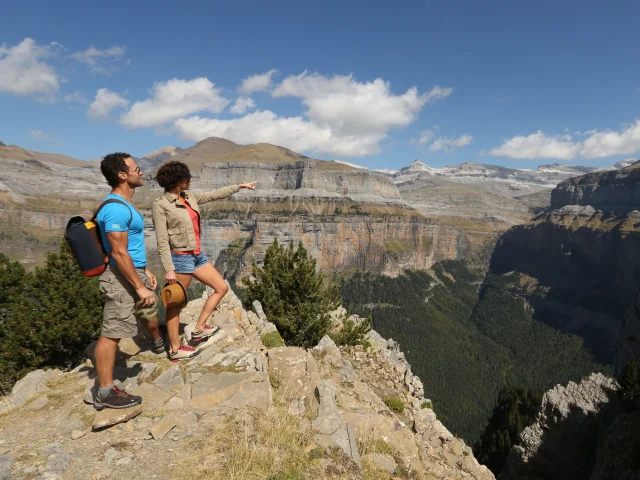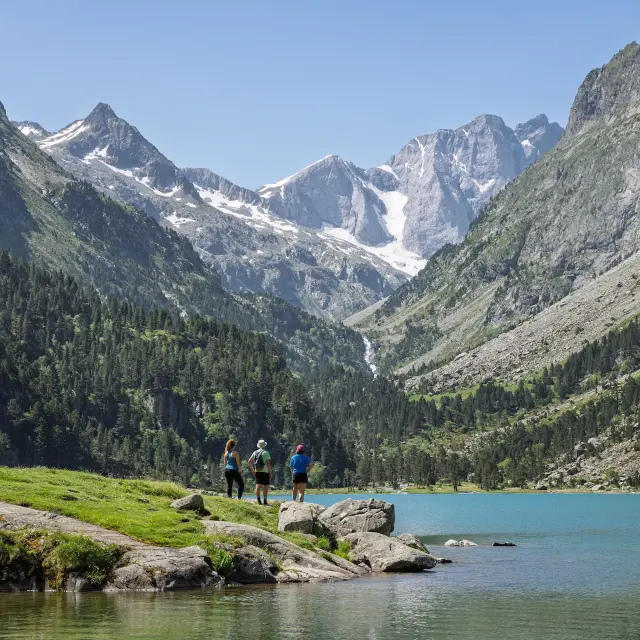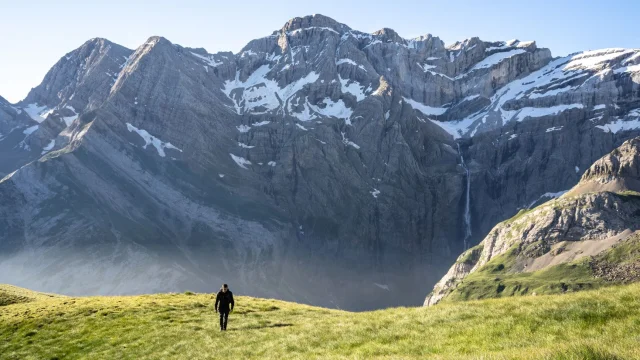
Hiking on the Pahule ridges, with a view of the Cirque de Gavarnie ©Anthony Bonal
|
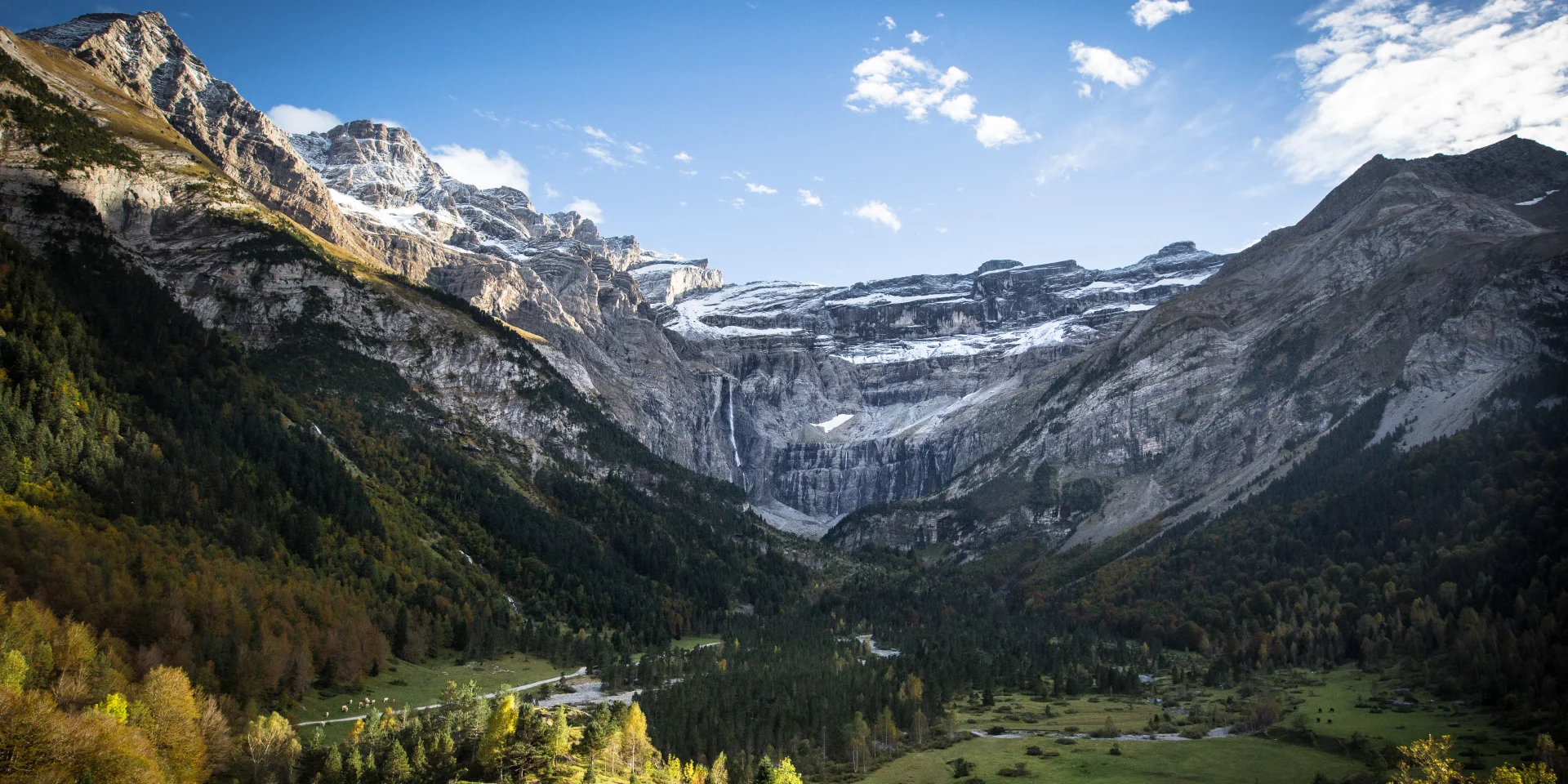
The Cirque de Gavarnie
|
You might find it hard to believe that Gavarnie is not alone, so exceptional does this colossus seem. And yet Troumouse and Estaubé are right there beside it. Together, they are three stone brothers linked forever. Together with their Spanish neighbour Ordesa, they form the Gavarnie-Mont Perdu massif, a natural masterpiece listed as a World Heritage Site.
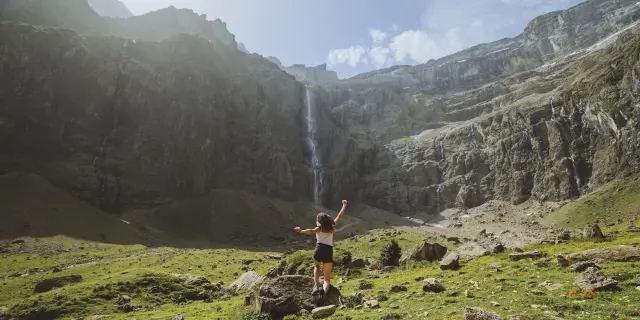
It is certainly the best known. It’s easily reached by a lovely walk that can even be done on horseback or donkey-back in summer.
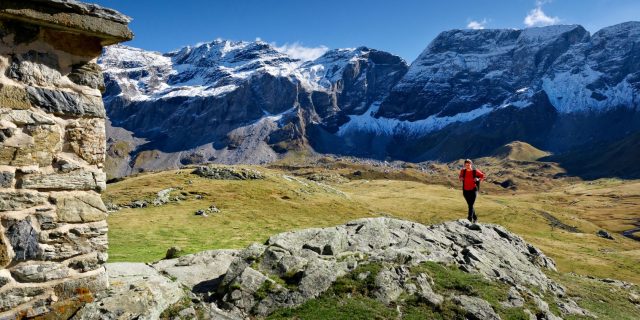
The Goliath of cirques, even bigger than Gavarnie, Troumouse is out of the ordinary. A curiosity: the plain stretching out in front of it is strangely flat. A marmot’s paradise!
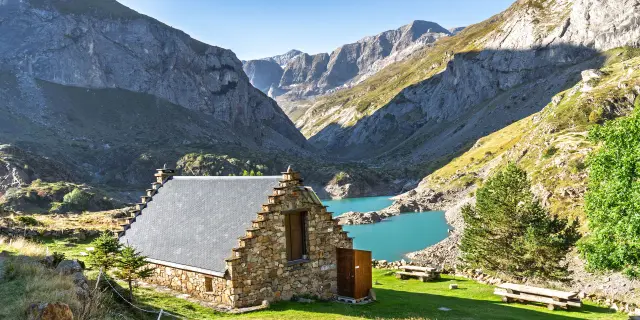
The Cirque d’Estaubé is only an hour’s walk away. A world of stone and lichen, another planet with something of the moon about it.
Hiking on the Pahule ridges, with a view of the Cirque de Gavarnie ©Anthony Bonal
|
As soon as you drive through the village, it jumps out at you, grips your throat and sweeps you off your feet! More than 5 kilometres in diameter, vertical walls 1,500 metres high, hundreds of waterfalls and a succession of high peaks topping 3,000 metres. A monumental natural amphitheatre of rare perfection, Gavarnie looks like a pure invention.
“It’s the most mysterious building of the most mysterious architects; it’s the colosseum of nature: it’s Gavarnie”.
They are all impressive, making up a unique part of the Pyrenees, a sacred mountain declared a World Heritage Site by UNESCO in 1997. An incredibly rich natural and cultural heritage.
Gavarnie was for a long time the cradle of Pyrenean mountaineering, the base camp where French and foreigners flocked to attempt great expeditions. The village cemetery still preserves the moving memory of these dynasties of sherpas who multiplied their exploits: Laurent and Hippolyte Passet, their sons Henri and Célestin, the great heroes of Pyrenean climbing.
For more than 30 years, Célestin climbed many firsts, culminating in his triumph on 7 August 1889 when, to conquer the formidable Gaube couloir, he cut 1300 steps in the ice.
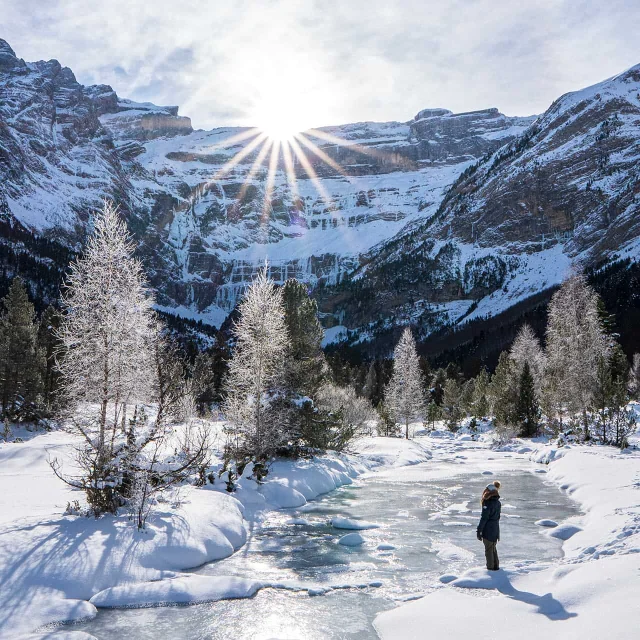
Cirque De Gavarnie in Winter
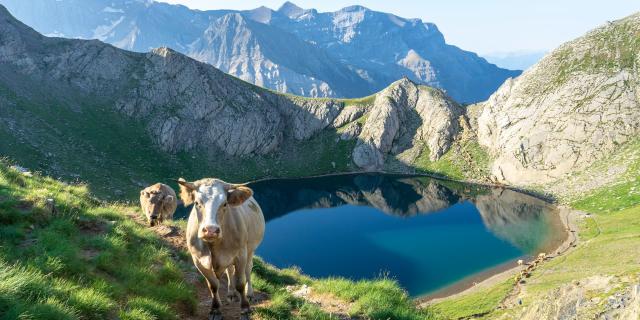
Cross-border cooperation
Since the 14th century, Gavarnie-Gèdre and the Broto valley have been linked by “lies and passeries” treaties. Every summer in July, more than 1,000 Spanish cows cross the Bernatoire pass to graze in the Ossoue valley. It’s an age-old tradition where, as they say, the land is French but the grass remains Spanish.
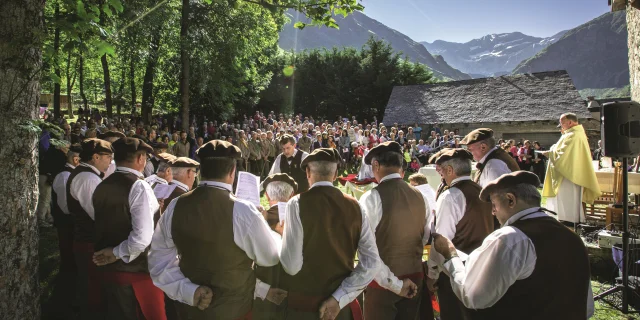
Every year, the mountain guides gather at the Héas chapel, near the Cirque de Troumouse, for a mass in their honour.
This pretty stone and slate chapel blends in perfectly with the mountain scenery. The ceremony is accompanied by traditional mountain singers.
On the French side, the majestic Cirque de Gavarnie is surrounded by its accomplices, Troumouse and Estaubé. Cross the ridge and Spain reveals the Grand Canyon of Ordesa, a veritable “Pyrenean Colorado”, flanked by the wild and secret Canyon of Añisclo.
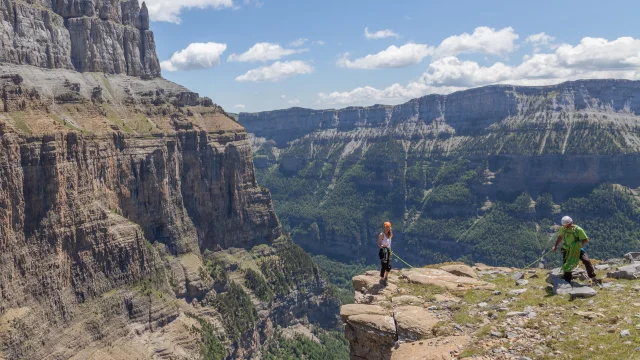
Climbing in the Ordesa Canyon
|
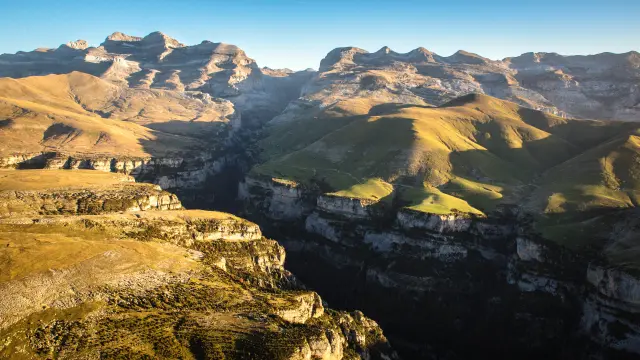
Anisclo Canyon
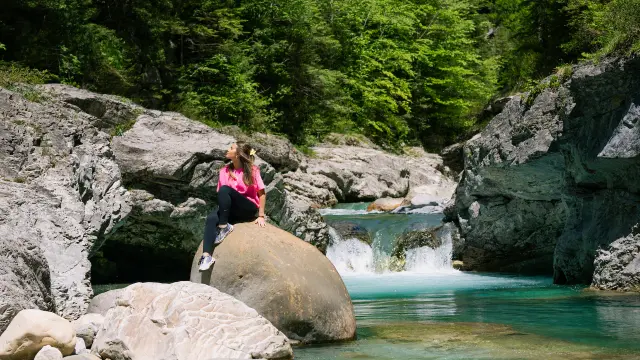
Hiking break at the Bellós river and its natural pools of green and turquoise water
|