©

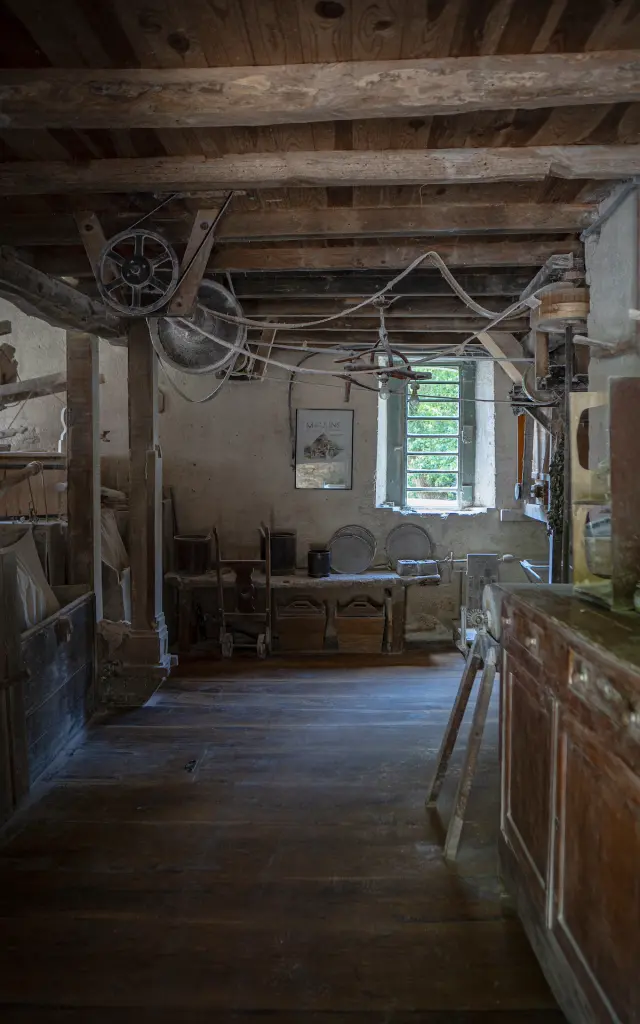
Visit to the Moulin de la Ribère © Anthony Bonal

|

Anthony Bonal

Flour from the Pyrenees

Pierre's family mill

Pierre has taken up the challenge of bringing the family mill back to life. Not only does he transform the grain into exceptional flour, but he also invites you to get to work creating your own bread. This is your chance to listen to his anecdotes, full of twists and turns, and to rediscover the real taste of the flavours of yesteryear. A fun, gourmet experience to share with family and friends.

mill

From mill to bread oven

The family mill and flour

Pierre, tell us the story of the Ribère mill

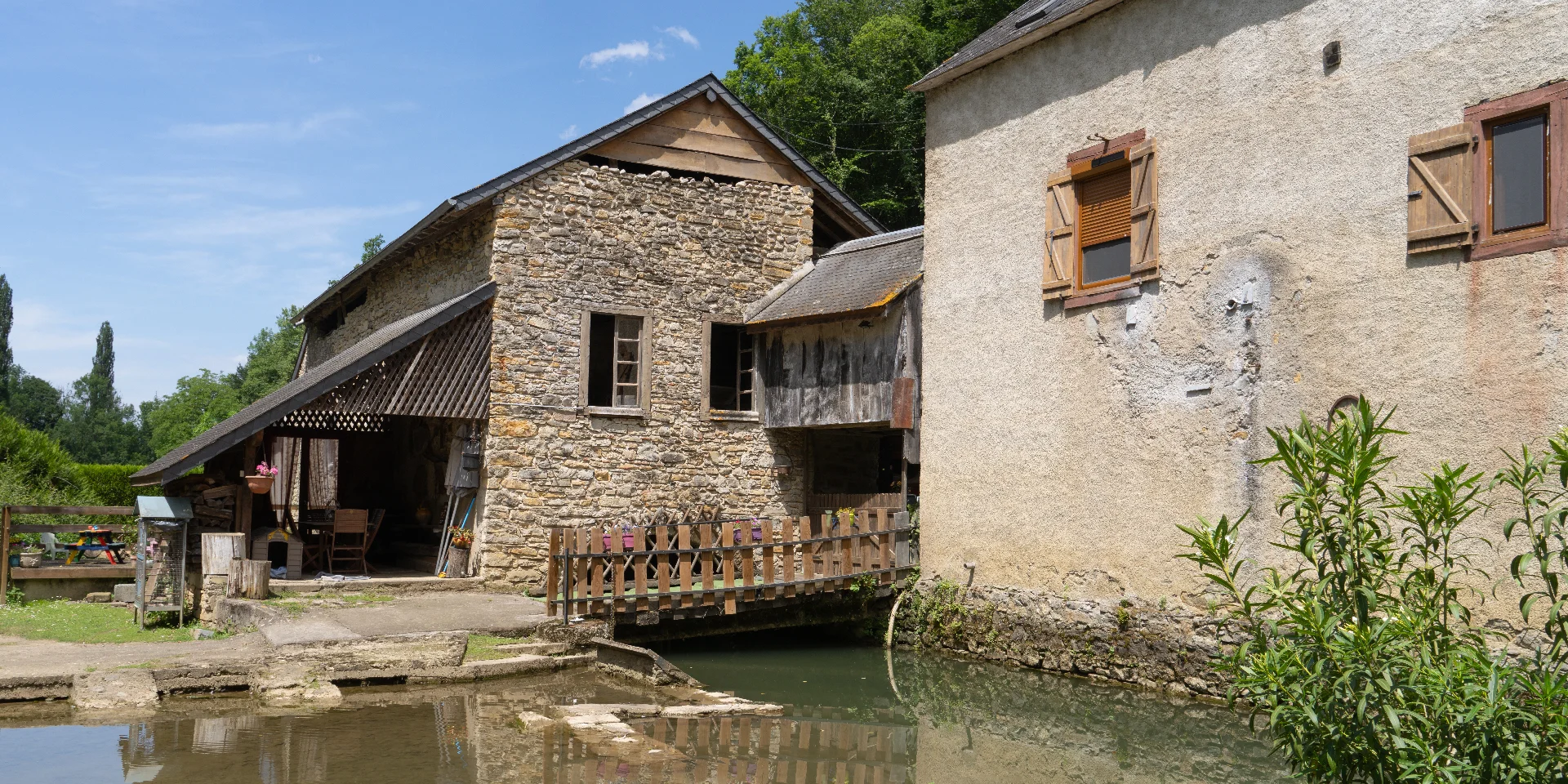
“The Moulin de la Ribère is in the Baronnies, in the commune of Mauvezin, close to the Abbey of Escaladieu (2km).

In 1710, before the French Revolution, the Escaladieu Abbey owned 5 mills in the Hautes-Pyrénées, including the Ribère mill. In 1810, his great-grandfather’s uncle bought the mill. From then on, it remained in the family, unlike most of the mills that were abandoned, often due to a lack of succession, during the 1950s and 1960s.

It passed from father to son over several generations, and in 1964 my father became the owner. However, he did not continue to produce wheat flour because it was no longer profitable. So he sold his milling rights (the quota). Out of the 1,500 mills in the Hautes-Pyrénées, there were only 7 millers left, who bought the quotas from all the others.

When did you inherit the mill?

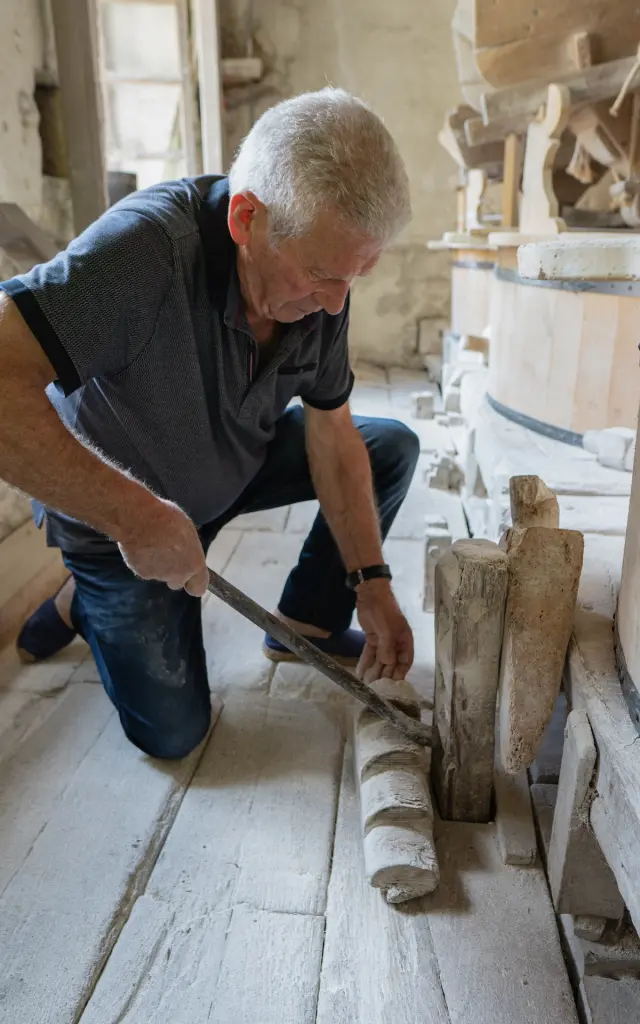
“My father left me the mill in 1970. I was a nurse at Lannemezan hospital. And when I retired in 2004, I finally found the time to pursue my passion. I restored the mill and organised tours of it. Visitors thought it was a shame that the mill wasn’t working. So in 2008, I got it up and running again, and a year later I was making flour from wheat and maize, just as I used to.
I had become the new miller of the Baronnies.

But as the desire to make quality flour from quality grains grew, and demand for organic flour increased, I approached local certified organic producers to source exclusively organically grown cereals. So in April 2013, I obtained organic certification for all my flours. This certification was issued by Ecocert.
Pierre, what kind of flour do you make?

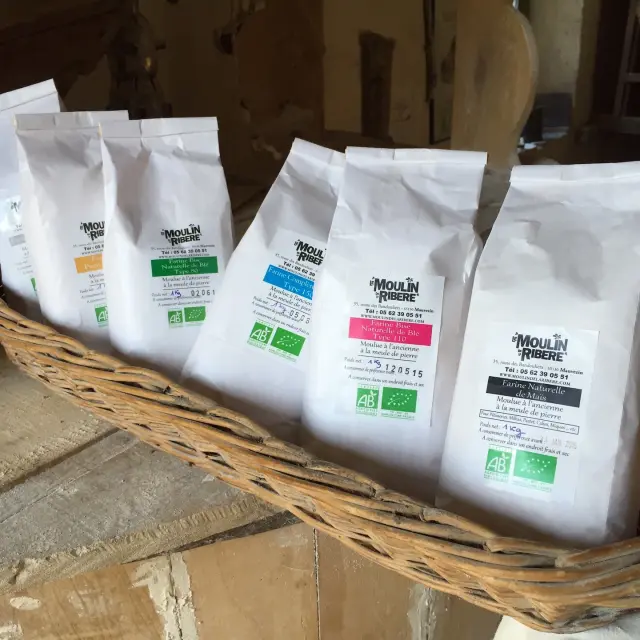
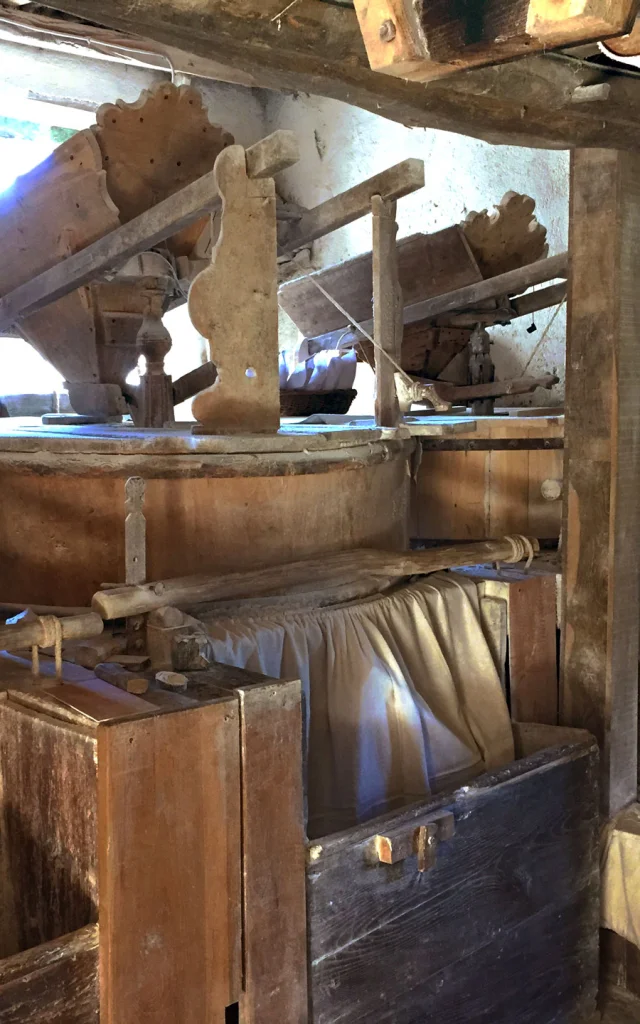
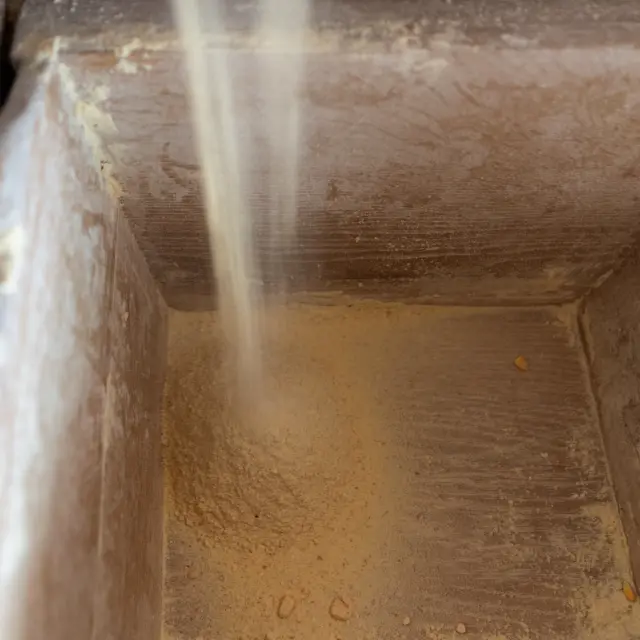
“To grind the grain, I use the old-fashioned method. This means using a flint millstone powered by water. There’s only one pass and then the grind goes through the sieve. This produces 3 types of wheat flour: T80, T110, T150. These figures correspond to the ash content. The higher the number, the more complete the flour, and therefore the more minerals it contains. This process crushes the grain, making it very difficult to obtain high yields and white flour. The millstones turn very slowly, so the flour does not heat up, preserving all the qualities of the grain.

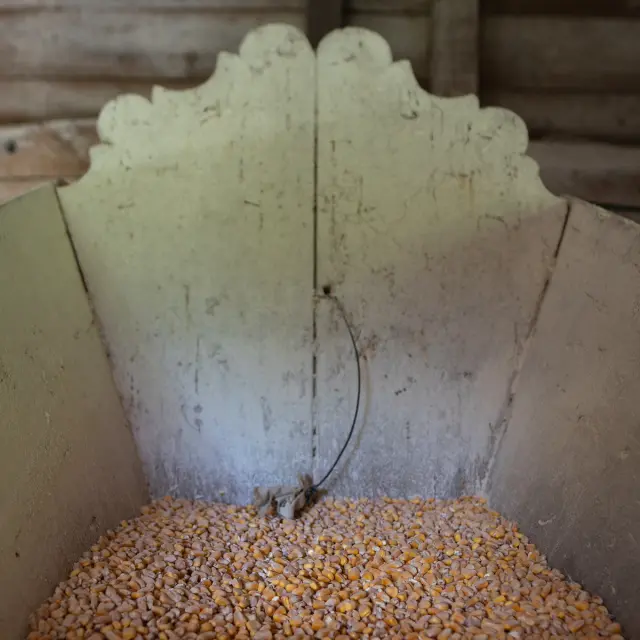
Pre-packaged at the mill, in 1kg, 5kg and 25kg bags, you’ll find flours made from wheat, maize, rye, buckwheat and spelt (an ancient variety of wheat with a composition similar to that of common wheat).

The mill is capable of producing a maximum of 2 tonnes of wheat flour per month.

courses

Traditional bread courses

Making sourdough bread

How did you come up with the idea of doing traditional bread courses?

“First of all, there were the visits, then the flour, then the bread-making.

Loïc, a young farmer and baker, came to see me and suggested that I make bread at the mill and why not offer courses open to the public. I liked the idea, especially as there was demand from my visitors. And so, for the last 4 or 5 years, we’ve been offering ‘traditional bread’ courses at the mill from May to October.

And today it’s not a young farmer-baker who comes to help me with the courses, but 2 young farmer-bakers. Fred has joined our team.

How do these courses work?

“We limit the number of adults to a maximum of 16 (plus the children of registered adults) to keep the day friendly.

The day starts at 9am with participants being welcomed at the mill over a cup of coffee, while we get to know each other a little. Then the kneading begins. Everyone kneads their own dough and we leave it to rise for the lunch break. Loic and Fred make us wood-fired pizzas as an appetiser, but everyone brings their own picnic lunch.
In the afternoon, the patons are shaped (you can make long or round loaves weighing between 500 and 600 grams) and put into baskets. While you wait for the wood-fired oven to heat up, you can take a walk around the mill. Then, at around 4pm, the bread is put in the oven and baked for 1 hour. In the meantime, there’s a coffee break until the bread comes out of the oven.

At the end of the afternoon, you’ll leave with your bread and all the knowledge you need to make a traditional loaf of bread (leavened) baked over a wood fire.


Practical information

The Moulin de la Ribère
35 route des Bandouliers
65130 Mauvezin

Tel: 05 62 39 05 51
www.moulindelaribere.com

Old-fashioned bread-making course

Prices: €65/adult and €22/child (5-12 years)